

on November 02, 2025

Choosing Your First Pickleball Paddle: What You Should Know
Congratulations on stepping into pickleball! Choosing your first paddle is exciting. While paddles today don’t vary as wildly as racquets in tennis, there are important differences to understand. A well-matched paddle will help you enjoy the game more and feel comfortable right from the start.
Here’s what we’ll cover throughout this guide: weight, shape, core, surface, grip size, and how each affects your play.
Weight – The Most Noticeable Factor
Weight affects how fast you can react, how comfortable you feel at the net, and how much power you can generate. Most good paddles fall within a ~2-ounce range, but the difference still matters.
- Lightweight (under ~7.4 oz): Easier for beginners. Helps with quick reactions, especially at the net or kitchen.
- Midweight (≈ 7.5–8 oz): Balanced for control and power. A good all-around choice for many players.
- Heavyweight (8 oz+): Favoured by more advanced players or those coming from tennis. Offers more stability and potential power but requires confident swings.
Advice: If you’re new and find timing or swing speed challenging, start with a lighter paddle. If you’re more experienced or used to racquet sports, a midweight may feel right. Stronger or more aggressive singles players might prefer heavier paddles.
Shape – How It Affects Play
Paddles come in different shapes, which subtly affect reach, sweet spot, control, and power.
- Standard / Square Face: Most common. Wide sweet spot, great for general play.
- Wide-Body: Larger hitting area; helpful for beginners or players prioritizing forgiveness.
- Elongated Shape: Narrower face, longer reach. Favoured by advanced singles players or baseline hitters. Demands more precision.
- Hybrid Shapes: Blend features of wide-body and elongated designs.
For your first paddle, a standard or wide-body shape offers the best balance of control, comfort, and versatility.
Core Material & Construction – The “Feel” of the Paddle
The core determines how the ball feels on contact, how much vibration you feel, and the paddle’s durability.
- Wood Cores: Heavy, loud, consistent – great for entry-level use.
- Nomex/Aramid Honeycomb: Harder feel, louder impact – used in older or mid-level paddles.
- Aluminum Cores: Lighter with good control, but some trade-offs in power.
- Polypropylene (Poly) Honeycomb: The modern standard – quiet, consistent bounce, and durable.
If possible, start with a polymer core for a modern feel and better overall experience.
Surface (Face Material) – Spin, Control, and Durability
The face material matters more than many new players realize. Higher-end paddles use carbon fiber or textured surfaces that enhance spin and control.
- Basic composite or fiberglass faces are affordable and work well for beginners.
- Carbon fiber or raw-fiber faces allow more spin and finer control.
- If you’re just starting, you don’t need a premium carbon paddle, but investing in one later can elevate your game.
Grip Size and Handle – Fit Your Hand
Grip size is often overlooked, yet it’s key to comfort and control.
- Most paddles have a grip size of around 4¼" circumference, some up to 4½".
- To test: Measure from the tip of your middle finger to the bottom crease in your palm. If close to 4¼", that’s ideal.
- You can always fine-tune grip size with an overgrip or replacement grip.
How to Choose Your First Paddle – Quick Summary
- New players: Lightweight (<7.5 oz), standard or wide-face paddle, polymer core, mid-range surface.
- Intermediate / racquet-sport players: Mid-weight (7.5–8 oz), slightly elongated face, carbon or quality composite surface.
- Advanced / singles players: Heavyweight (8 oz+), elongated shape, top-tier core and face materials.
Whenever possible, test paddles in person – feel and comfort matter as much as specs.
Paddle Recommendations
Here are some solid paddle options across different budgets and play styles:
- JOOLA Ben Johns Perseus Pro IV – High-end pro model for advanced players.
- Diadem Edge 18K Power – Premium power paddle offering strong spin and stability.
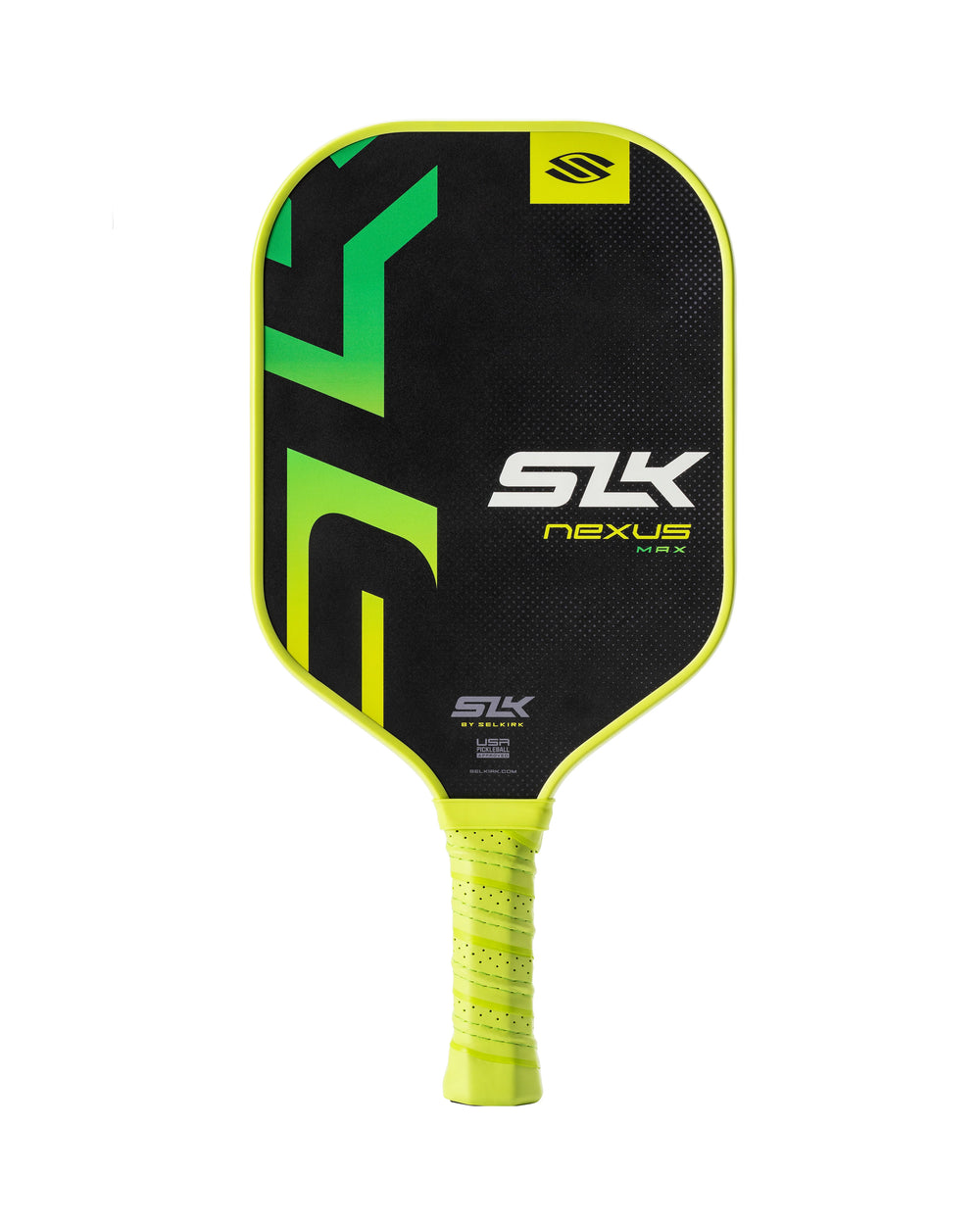
- Selkirk SLK Nexus Max – Great budget-friendly paddle for recreational players.
- Head Radical Tour EX Raw (2024) – Mid-priced, balanced paddle for improving players.
- Wilson Vesper Control 17 – Advanced control paddle for precision-focused players.
- Selkirk SLK Halo Control Max – Mid-budget control paddle and a perfect “step-up” option.
Final Thoughts
There’s no single perfect paddle, but by matching weight, shape, core, and surface to your playing style, you’ll gain confidence and control faster. Visit Racquet Vault to test paddles in person and find the one that feels right for you.
Here’s to many rallies, great games, and fun improvements! Follow us on @RacquetVault for gear updates, tips, and exclusive offers.